I would like to introduce you to a humble set of stairs not too far from my apartment.
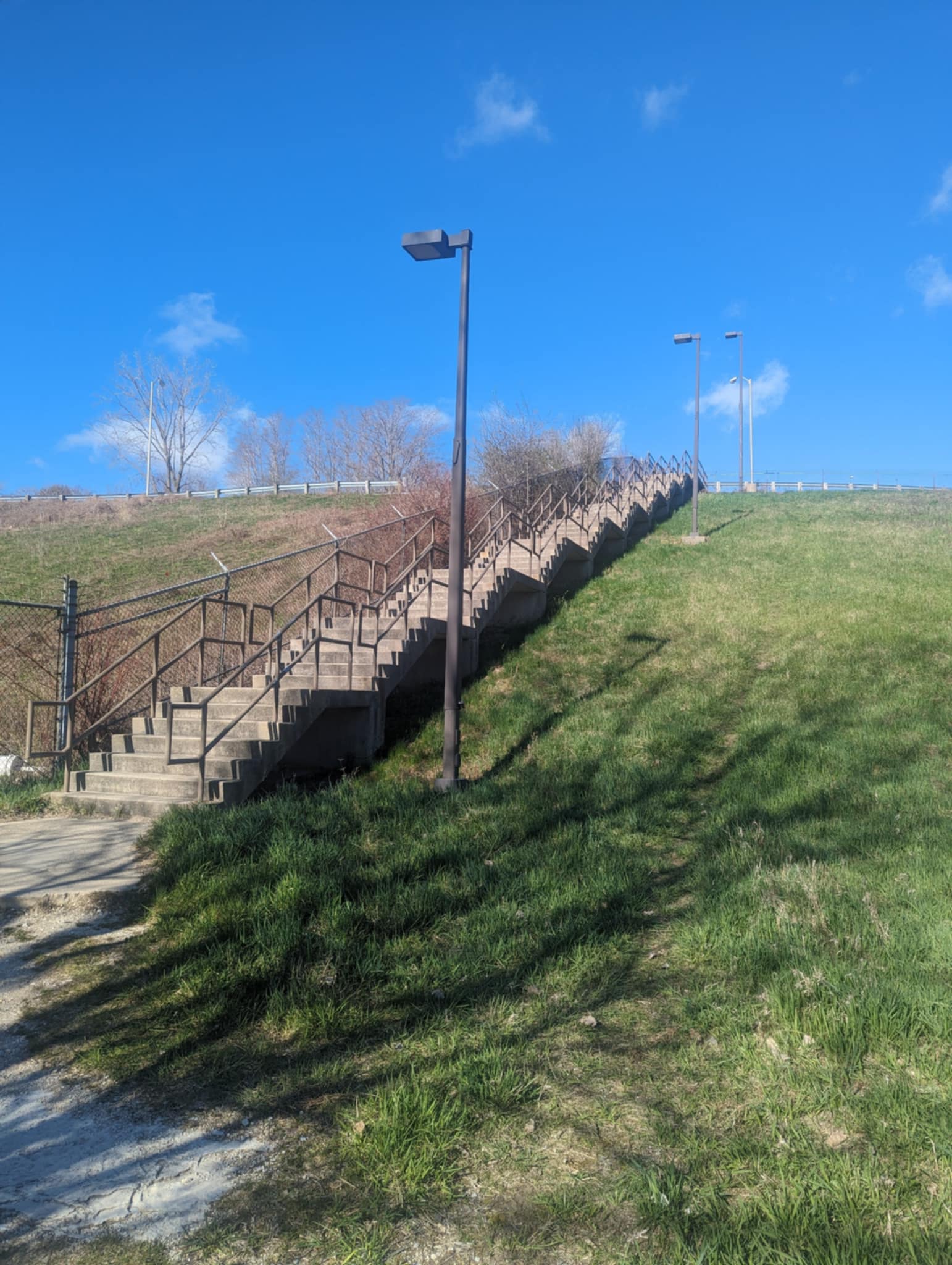
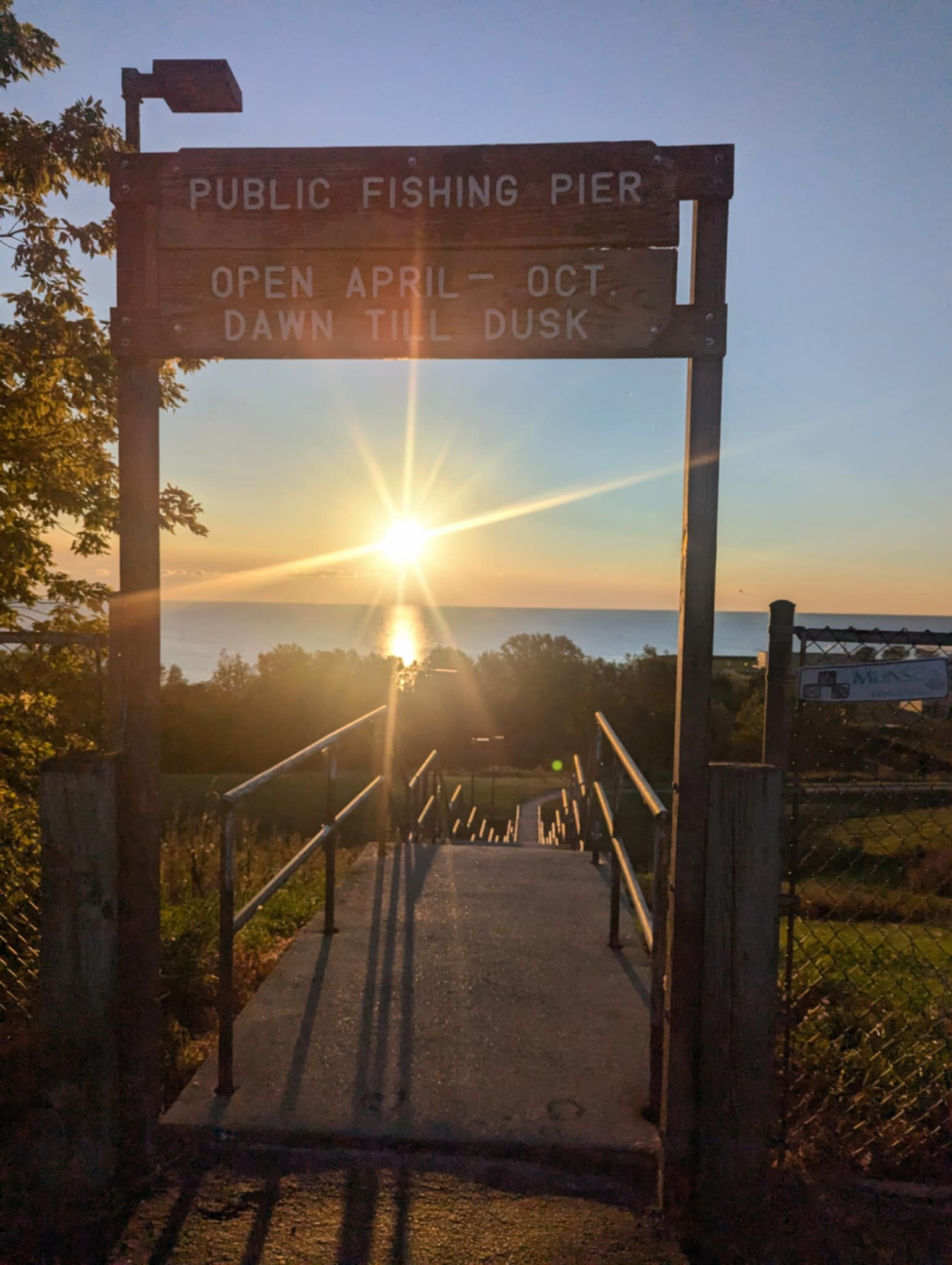
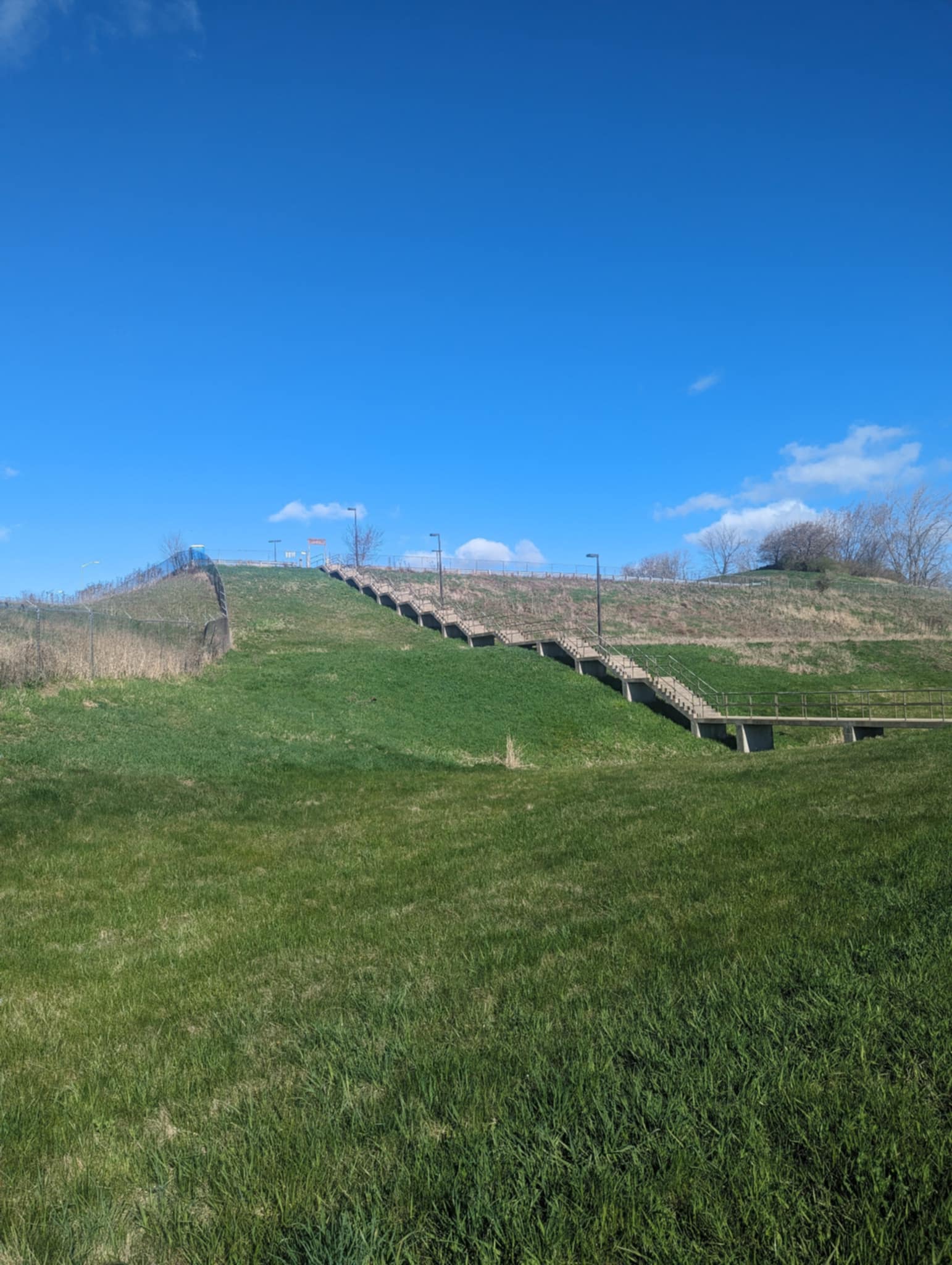
Well, it’s actually two sets. It’s my one of my favorite spots in the area and where I go to do one of my least favorite activities, stair training. It has 142 stairs total and a 250ft flat walkway that separates the two sections. With the Lake Michigan views and breezes, and not well-marked on maps, it’s the perfect little hideaway to throw in my earbuds and spend an quiet hour or two just repeating the climbs.
When I say hour or two, I’m not exaggerating! I’m currently working my way up to listening to the entire 2 hour and 36 min Hamilton Broadway Soundtrack (as I am also working on learning all those lyrics) and get well over halfway during my sessions. When I do the stairs, I focus two main things. Basically, beating my knees and lungs into shape to improve my hiking experience!
Building Resilient Knees
I don’t like stair climbers indoors for multiple reasons. First, it’s boring. I’d rather be outside! But also because they just aren’t very good for training for real world applications. They’re great for general fitness purposes, but for hiking, not so much. They are too consistent in their height and rhythm which isn’t at all like a hiking trail where you have to go up variable step heights or scramble over rocks and roots. The movement of the machine actually makes it easier on the rebound, which you won’t have out on the trail. And of major importance to me as I train for canyon hiking, they don’t train you for the downs!
While this set of stairs outside does have a uniform rise and tread, there’s no rebound and I can go down. It’s also a lot easier and safer to do variations. I can alternate between single or double steps ups and downs. I can go up and down sideways. Do jumps or hops. High knees. And on and on. Basically every set I do, I do a different way. This is helping to prepare all my joints, muscles, and tendons to be strong, stable, and resilient no matter which oddball way I ask them to move and bear weight when I’m out on the trail.
Heart Rate & Breath Control
Yes, I want to go up and down as many stairs as possible in order to prepare my knees for the punishing elevation gain & loss in the Grand Canyon. But Grand Canyon hiking isn’t just about surviving the descent and climb. I also want to thrive and thoroughly enjoy the amazing sights of the canyon, not be struggling through to just get it done. I want that all times! So many times when I hike, I push through hills and it’s fine. But I gasp for air and have to stop all the time to catch my breath. I miss out on much of the beauty and wonder of my surroundings in those sections because I am so focused on the physical aspect. I’d like to get better at that and every professional hiking trainer (and runners) I’ve followed has touted the benefits of slowing down your hill & stair work. Slow to the point where you can make it up the incline without your heart rate spiking to your personal max and where you could hold a conversation and not be out of breath.
This slows you way down and I was mad frustrated by it at first! Today I did the stairs for an hour and only did 7 sets (994 stairs). I can and have done way more than that. It feels like I should go as hard as I can for as long as I can. But I’ve already started to see the benefits of this slower, more controlled method. I’ve hiked for years. There was a year or two I was also running and getting better and better at 5ks. But I have always struggled up any hill or staircase. I’ve always been out of breath with heart rate spiking. No matter how much I threw myself at the hills, weekend after weekend, I didn’t get any better at them. I got more mentally resilient to power through. But didn’t perform any better. I’m noticing now though, after incorporating more of this infuriating slowness, that I am getting better. A few weekends ago I was out at Lapham Peak and was chatting with a fellow hiker while going up and over a few hills. Didn’t even think about it. In the past, on that very same segment, I could never have carried on a conversation like that. It was SO enjoyable! What a revelation!
Walking Backwards
I also walk that 250ft stretch of flat sidewalk between the two sets of stairs backwards every time. Walking backwards engages entirely different muscles than regular walking does and is also great for building stability and balance. It takes practice to be able to walk backward confidently and I’m getting pretty good at it! I’ve been noticing that it is really helpful for knee pain. Since last fall when I sprained my meniscus, very nearly tearing it (the doctor was shocked that there was no tear on the MRI with how much pain and swelling I had), I’ve had problems with the knee. It stiffens up really easily and gets some fluid on it. Not terrible, but definitely a hindrance and something that concerns me for my Grand Canyon hike. I’ve continued doing several physical therapy moves that the doctor gave me and some from my personal trainer. But the problem persists. After the 23 mile Lake Geneva hike, I expected my knee to be a wreck but it was actually at like 90%! I had just started adding backwards walking about 2 weeks before that and I think that is making a huge difference!
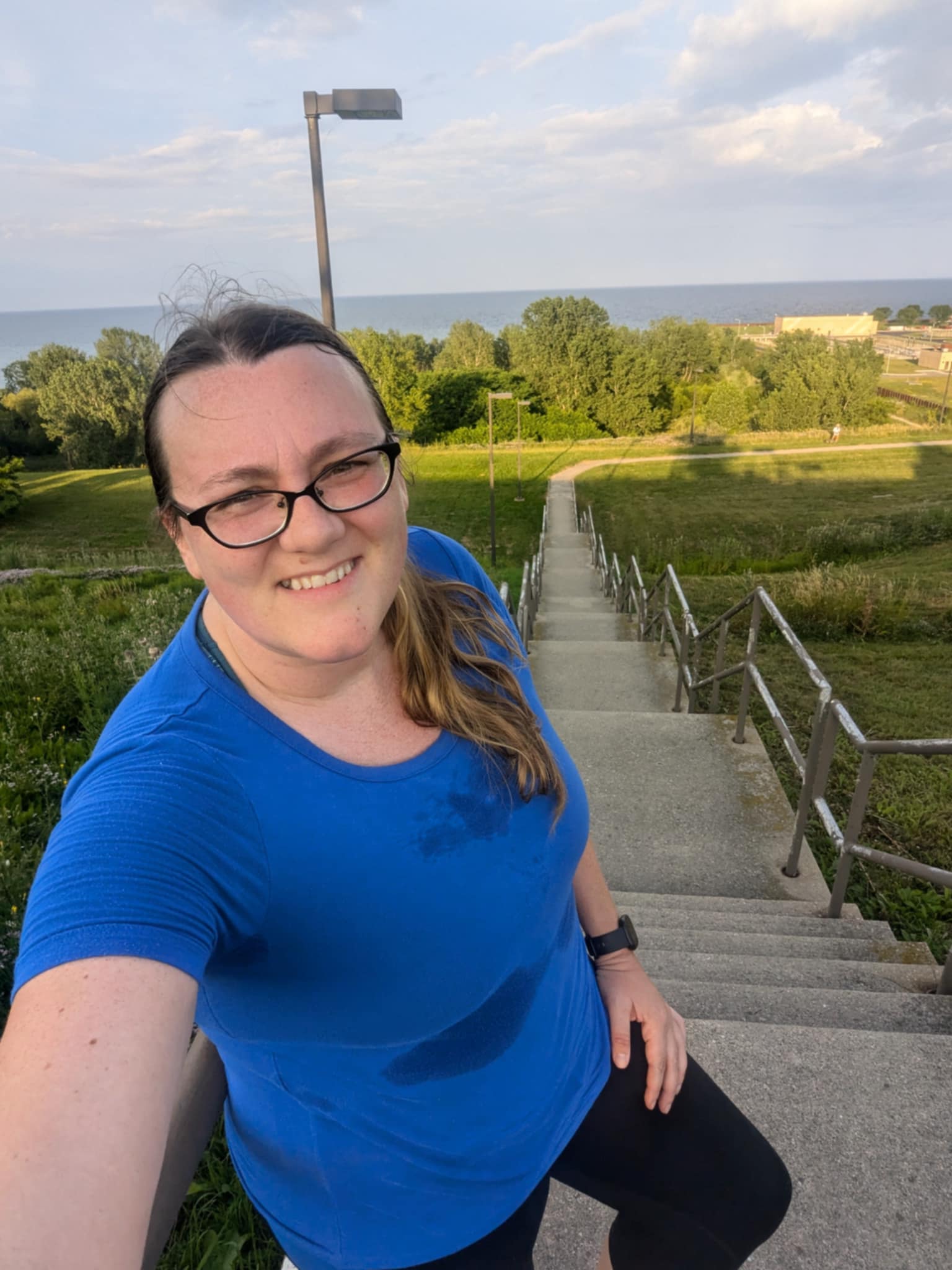

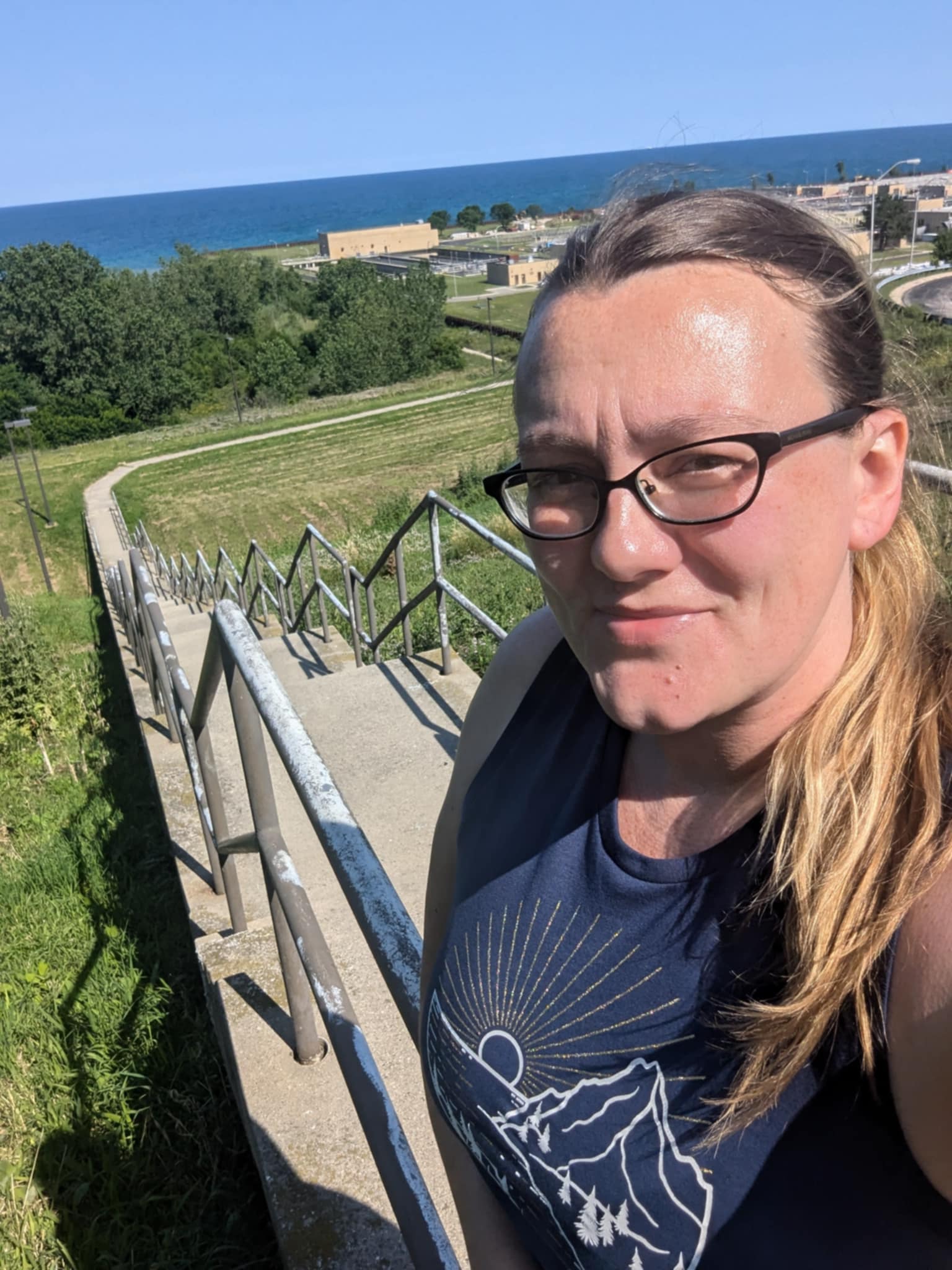
Stairs are officially on my weekly training plan from here on out. You’ll find me out there at least once a week, if not more. I might add more sessions later in the summer, both to just get more stairs in as my training peaks, but also to get a little heat conditioning in. My goal is to build up to a full two-hour session, stacking on more sets while keeping my heart rate in check. Slow and steady, sweaty and stubborn.
Discover more from An Ordinary Odyssey
Subscribe to get the latest posts sent to your email.
